Fascism is an important political category, but a confusing one. People use the word fascism in many different ways, and often without a clear sense of what it means.
We, Jewish activists and allies of the left, anti-racists and anti-fascists, declare that we are relieved by the victory of the New Popular Front (NFP) in the legislative elections. We fully support the NFP’s efforts to fight against all forms of discrimination, and to block the extreme right.
We applaud the NFP for the various charters against anti-Semitism proposed by its member parties, which unequivocally includes firm condemnation of anti-Semitism, security for places of worship, training for young people and elected representatives, and plans to combat discrimination.
We believe it is crucial to reinforce these charters with clarifications in order to dispel the crisis of confidence that affects us on the left on this issue. We remain deeply concerned by the far-right’s attempts to exploit the left’s weaknesses, seeking to weaken it, even though this party remains the main danger for all minorities in France.
Update 12/21/21: People’s Forum confirmed the hypothesis of this post that tech billionaire Roy Singham used Goldman Sachs Philanthropy Fund to launder money to them.
Update 1/18/22: Newsline magazine confirmed all of the substantive findings of the post below and found that many of the entities we mentioned have significant investments in Israeli companies and/or companies complicit in Israel’s occupation of the Palestinians in stark violation of the boycott, divestment, and sanction (BDS) campaign.
Update 12/18/22: The original version of this post (archived here) contained a misleading infographic created by ideological allies of India’s far-right Islamophobic Modi government falsely alleging that human rights activist Gautam Navlakha was complicit in a Chinese Communist Party/Roy Singham influence-peddling scheme. Navlakha’s comrades reached out to us and explained that he is the victim of Modi government harassment and frame-ups and that he is neither a Uyghur genocide denier nor an apologist for China’s ruling class.
Using Cause IQ’s database of non-profit organizations, Twitter users discovered that in 2019 Goldman Sachs Philanthropy Fund (GSPF; EIN: 31-1774905) funneled over $12 million to the People’s Forum, over $12 million to Vijay Prashad’s think-tank The Tricontinenal LTD (EIN: 82-2882135), $210,000 to Codepink, and $20,000 to AIPAC (the Association for Investment in Popular Action Committees [a pro-Assad lobbying group] not to be confused with the American Israel Public Affairs Committee which has the same acronym).
Text reproduced based on screenshots published by ISO Leaks which noted: “Some of the Seattle Socialist Alternative members referenced in this account are still members and politically active; some left Socialist Alternative, some joined Democratic Socialists of America (DSA); some are currently member of DSA’s Reform and Revolution Caucus.”
content warning: mentions of sexual harassment, age gap relationships, neglect, substance abuse, leftist groups being unhealthy and problematic, grooming
Originally published on Medium.Edited for clarity, hyperlinks added. Fash Busters’ thread corroborating the authenticity of the screenshots below through open-source investigation can be found here.
When I was 18 years old, I became a co-moderator of what would soon be one of the biggest mental health advocacy groups on Facebook. What I didn’t know was that the owner of the group, a man who went by a few names like Papi Chulomin and Richi Medhurst, was hiding how manipulative and abusive he really was. All under the power of “advocacy”. Continue reading Richard Medhurst, Serial Groomer of Underage Girls?
Originally posted on Medium by Emily Janakiram. Edited for clarity.
I am writing this statement to demand that Verso issue an apology to me for their behavior, verbally and in writing, which includes the sexual harassment I faced from Jacob Stevens, their US publisher, and the company’s response.
In September 2018, 10 months into my time at Verso, I attended an industry event with Jake and a few other members of the Verso staff. At the end of the night, only Jake and I remained in the bar. We drank together (he paid) and discussed my career, that I needed to find a “thing” that made me stand out. He then said, of my hiring, “we needed someone nice to look at in the office besides Wes,” or words along those lines. Not sure how to react to this, I joked and deflected. He later asked me to “share a cab” back to Brooklyn with him. Jake and I had previously spoken very little; we did not have the collegial relationship he seemed to have with the rest of the staff, and he never showed any interest in my work or professional development. Jake, as the director of the US office, and as a board member, is directly responsible for hiring, firing, promoting, and granting raises. At the time, I was the newest and lowest paid employee, the only woman of color on full-time staff.
Afterwards, I was not sure what to make of this. I spoke to two male friends that night, who both told me that this behavior was inappropriate and was likely a proposition of some kind, and to a female colleague the next day, who agreed that it was inappropriate. However, I decided not to pursue the matter. I didn’t want to make “a big deal” out of something that seemed relatively minor. Perhaps I was misconstruing the events, or perhaps I invited Jake’s comments upon myself. At any rate, I was the newest employee, an outsider; with the least education, the fewest accomplishments, the fewest connections, and the most to prove.
Furthermore, I had my first introduction to the company’s attitudes about sexual harassment in my first two months there, from November 2017- January 2018, when the #MeToo movement kicked off, the accusations against [Gopal] Balakrishnan and [Franco] Moretti were made public, and the board closed ranks around them, terming the movement as “liberal identity politics”; and that a sexual harassment policy or an HR department constituted “corporatist neoliberalism.” A very odd claim for the board of a for-profit union-busting commercial enterprise to make. We were told not to make any public statements surrounding the allegations. The board refused to cancel the contracts of Moretti or Balakrishnan or to remove Balakrishnan from the board; he would later resign voluntarily. One male board member circulated an email to the entire staff describing feminism and #MeToo in these terms, and likened cancelling the contracts of sexual predators to “burning books.” We all sat around during lunch and read an essay by Susan Watkins in the New Left Review and patted ourselves on the back for our cool smart revolutionary politics. So I didn’t really feel that any good would come of making an issue over this, and held my tongue for six months.
However, this incident weighed heavily on me, the extent of which I wouldn’t even realize until after I left Verso. The company is very successful in marketing itself as some kind of vanguard party, both to its staff and to its audience. It is very successful at making you feel that you’re lucky to be overworked, underpaid, and exploited by them, that you’re betraying your co-workers, or “comrades,” as we called each other, if you rock the boat in any way or fail to achieve the unrealistic standards that they set—all the while, of course, raking in profits by publishing books that rail against this very practice. Still drinking the Kool-Aid at that point, I felt that I was too stupid, too unaccomplished, too uneducated, too uncool to work there in the first place, and if I was seen as a sex object by my boss, well that’s what I deserved anyway and everyone knew it.
In March 2019, at a meeting of the US Womens’ staff, I raised the incident, as was encouraged to file a formal grievance, following the procedures laid out by the sexual harassment policy which we had crafted, independently of senior management, in the wake of the revelations surrounding Balakrishnan and Moretti. I was the first staff member to avail themselves of this policy. I asked for a meeting to discuss the incident with Jake, a verbal apology, a written apology, and a staff meeting to review our policies and establish something concrete to begin rectifying the gender dynamics within the workplace. The Womens’ Group was vocally very supportive and expressed complete solidarity with me.
The first step was for the shop steward—which for some reason we had, even though we were not unionized—at the time to raise the issue with Jake over a meeting. This happened over lunch, during which Jake said he “remembered” the incident and thought it was “strange” at the time, but didn’t mean anything by it, and as for the offer to “share a cab,” was only trying to “make sure I got home safe,” and that he “shouldn’t have engaged in the conversation”—as though he were not the one who initiated it in the first place.
I do not blame the shop steward for this, but in retrospect I find it very inappropriate that this discussion happened over lunch. I can’t imagine a sexual harassment claim being discussed at any other company in the same way, as though it were a friendly social event and not a serious allegation of misconduct, or that Jake would have responded this way if he felt any sense of shame or remorse or accountability in such a meeting. I can’t imagine that this conversation as recounted to me lasted the duration of an entire lunch either. Did they just move on after this to discuss Smart and Important Leftist Topics over burgers and beer?
I did not feel that this was acceptable and was asked to write a statement discussing the event, which I did, and I have appended it here. In the spirit of full cooperation, and saying what needed to be said, I spent an evening writing an explanation to the publisher of several left-wing books on feminism and labor, my boss, as to why it was wrong to hit on his employees. This statement was read and discussed in a meeting with Jake, myself, the shop steward, and my direct supervisor. I did find this meeting to be productive; Jake said that while “he remembered the events of that night differently,” he was “mortified” to have caused any distress to me by these actions, and was eager to work with me to transform the working culture at Verso to make it more welcoming to women, and to continue fostering my professional development at the company. While this wasn’t a wholehearted acknowledgement of wrongdoing, I felt that it was the best I could hope for, and left the meeting feeling hopeful that things would be satisfactorily resolved and capable of continuing to work with Jake in the office. I asked for the points we discussed in the meeting, including Jake’s apology, in writing.
Six weeks later, after many follow-ups from my end—during which time I maintained a collegial relationship with Jake, believing that he felt genuine remorse and would do the right thing—I received this written document, along with an order not to disseminate it outside the company, lest it prove “damaging” to Verso. This document, which to all appearances had been written with the help of a lawyer, flatly denied that Jake had engaged in any untoward behavior, in fact that “it does not sound like something I would ever say.” It resorted to the classic non-apology of I’m sorry that you overreacted and took offense at my completely benign behavior. I am appending that letter here and defy Verso to act on whatever threat they implied here.
I asked for another meeting among the staff to discuss this, as I felt that it was totally unacceptable. This time, the attitude from the staff was very different. The next couple of weeks are a bit of a blur, I remember many discussions with the shop steward, at least two meetings with multiple members of staff, and a number of tearful discussions in the stairwell with another female staff member whom I considered a close friend.
The overwhelming sense I received was that no one knew what to do at this point and that everyone was too busy with our ever-increasing workload to continue dealing with this.
I had to make the difficult decision as to whether to reveal the grievance to the entire staff and push for an all-staff meeting to discuss it, or try to be “nice” and not cause too much bother to anybody and ask for a meeting only if people were interested and available, or to escalate this to the board—which included Jake— who had amply demonstrated that they did not take such things at all seriously. Perhaps in retrospect I should have revealed what had happened to the entire staff and demanded an all-staff meeting with concrete action points, and taken it upon myself to push for a resolution for this.
But I was ashamed, acutely aware of my outsider position, and not at all confident that I would unanimously have the support of the staff in this, some of whom have close personal friendships with Jake or are otherwise all too aware of on which side their bread is buttered. All of the staff was in the same position as I was—dependent on Jake for their livelihood and their salary and their professional development. And somehow it fell to me to find a solution to this that would not endanger anybody’s jobs, not cause too much inconvenience to anyone, not sin against our cool and leftist politics, not cost the company any money, and not result in me losing my job. Obviously, getting any kind of justice for myself would have to take a backseat to these concerns.
During one of the meetings with multiple staff members that I recall, I suggested an amendation [sic] to the sexual harassment policy, but was told that such a move would immediately alert the board that something was amiss. Instead, I was told to “use the weapons of the weak” (I don’t know what this means) and to “rely on personal friendship networks,” as though being treated with respect in the workplace—having one’s complaints of sexual harassment taken seriously and rectified—is dependent on membership in some kind of Brooklyn Media Leftist Cool Kids’ Club. I was told that it would have to be my responsibility to figure out what next steps to take, if any.
When I suggested that we hire someone to conduct sexual harassment trainings at the office, I was told that this was basically not cool and leftist enough for the hallowed halls of Verso. I was told instead to “find a way to feel more welcome at Verso,” which included “writing another piece for the blog”—unpaid, of course. I suppose, then, that if one does not relate to their workplace as a social scene, and does not have “personal friendship networks” within their workplace, one ought to just accept being left out to dry. Sexual harassers and sexual abusers within organizations habitually target outsiders who do not have “personal friendship networks” and I felt that this was especially true in my case. I did receive the assurance from one staff member that, were I to be fired in retaliation, “we would all go on strike.” But this is hardly a solution to anything. Nor was it a strategy unanimously agreed upon by the staff, but said to me by one friend trying to console me.
This was where the staff left matters, and where I was left to manage this situation on my own. My mental health, which had been very fragile for months, had taken a dramatic downturn, and I contemplated suicide on a daily basis. I exercised obsessively, for hours every day, because that was the only time I felt powerful and in control. I had auditory hallucinations for the first time in my life. At the recommendation of my psychiatrist I began working remotely two days a week, because I couldn’t bear to work in the same room with Jake every single day and listen to everyone laugh at his jokes as though nothing was wrong. I had to slap myself hard across the face multiple times just to walk into the office on the days I was there, and spent most of the day in tears, which was embarrassing for everyone. Obviously I was not getting much work done. I remember wondering whether or not to purposely try to look ugly when I went to work; if I dressed in sweats every day and skipped makeup and basic grooming, people would say ‘eew, look at her, giving herself such airs, why would Jake jeopardize his career to make a move on her, she clearly just wants attention.’ If I dressed up and wore makeup, however, they’d say, ‘see, look at her, dolling herself up, she was clearly asking for it and now she’s crying about getting what was coming to her, she clearly just wants attention.’ And then, I reflected on how insane it was that this was even a problem I had now.
In the midst of this I tried to fix the problem by being a better employee. I asked for additional training and guidance because the training one receives initially at Verso is extremely limited. This request was treated dismissively and with much heavy weather, and I was asked indirectly to consider that my senior colleagues were too busy to lend the guidance I needed. The medical accommodation that was made at the recommendation of a physician was treated as a major inconvenience and it was suggested to me that I needed to “find a way to be in the office” and was subtly reprimanded by a senior colleague for refusing to give my personal cell phone number out to authors. When my psychiatrist later recommended a two-week leave of absence, much concern was expressed by my colleagues—not for my well-being, but for the all-important publicity campaigns that I would so selfishly be neglecting.
I suppose, during this time when I was punching concrete walls and self-harming with boxcutters and lit matches in bathroom stalls to try and make it through the days in the office, that I ought to have forged some “weapons of the weak’’ and “personal friendship networks” in order to not inconvenience anyone and deal with being in the same room every day as my boss who sexually harassed me in such a demeaning way and the workplace that allowed him to get away with it, so that I could deliver 15 dazzling publicity campaigns a season on a salary of $40,000 a year. (The revolution after all, is not going to succeed unless Verso books get reviewed in the New York Times!) I can’t help but feel that, had this happened to a different woman at Verso, more established, with more clout- and more “personal friendship networks”—more would have been done to achieve justice for that woman. But perhaps this only happened to me specifically because I was not that woman.
In July, realizing that this would go nowhere and that Verso was an intolerable place for me to work, I decided to look for another job. I informed my direct supervisor and a senior colleague, who were totally supportive and furnished me with references. In August, I left, and in my exit interview told my direct manager and the shop steward specifically that I was leaving because of the incident with Jake.
In the months following, I attempted to rationalize what happened at Verso as isolated to Jake, and that this did not have anything to do with the rest of the company. After a while, I came to revise this stance, through time and distance, and through discussing it with other friends and comrades.
Also, because of another incident which threw Verso’s mishandling of the situation into sharp relief. At the time when the incident with Jake occurred—in fact, that very same week—the editor in chief of another small, leftist publication also behaved very inappropriately with me, though not as egregiously so as Jake. In January, I brought this up casually to a female editor at that publication whom I had gotten to know. That very week, I was informed that they had spoken to the editor-in-chief about the incident, informing him that it was unacceptable, and received an official written apology on behalf of the company from another editor, who was authorized to act in an HR capacity.
If this other company, who similarly had leftist politics and surely couldn’t be charged with uncool neoliberal corporatism for having HR personnel and a sexual harassment policy, could resolve this issue with relatively little fuss, why had this been seemingly so impossible at my own workplace? I realized that this was an issue not isolated to Jake, that I had been let down by the whole company, by people who made a very big deal about feminist leftist solidarity in theory, but in practice left me to solve this by myself. I unfollowed Verso on all my social media and no longer looked at their catalogue or read their books. When people gush to me about how “cool” it must have been to work there, I tell them exactly why I don’t anymore.
In late August, a friend forwarded me the event listing for an event titled “Will #MeToo Survive 2020?” which was to be hosted by Verso, and expressed concern that Verso was putting their name on this event after what happened to me there.
I was infuriated to see this, that Verso would brand itself as some kind of crusader for women in the workforce for clout and for feminist cred while I received no justice for what I went through working there. My friend offered to put me in touch with the organizer, I spoke to the organizer, informing her of the events outlined above. The organizer expressed some surprise, because her contact at Verso, who was also thoroughly aware of all these events, had not mentioned anything about this. I told the organizer that I would prefer that Verso not host this event; but that if they must, that they apologize publicly—that if they were going to publicly crow about their support for women in the workplace, then they must publicly own up to how they failed in this regard. I also wrote to the Verso staff member who organized this expressing my concerns and informed her that I had spoken to the organizer and that she would be reaching out to her shortly.
A few days later, this Verso staff member, along with another Verso staff member whom I had considered a close friend, wrote to me and requested a meeting to discuss the event. I had the strong feeling that this was an attempt to good-cop-bad-cop me or otherwise gang up on me into dropping this, and therefore asked a comrade to sit in on the meeting with me.
What followed was, in my opinion, extremely adversarial, inappropriate, and an attempt to protect Verso’s image and rationalize Verso’s behavior and not to rectify anything with me, despite claims to the contrary. One of the Verso staff members said, “I’m probably saying the wrong things, I’m upset.” It is rather galling to be told, in a meeting I didn’t even ask for, to discuss my sexual harassment grievance with a company, that one of its employees is “upset” and would therefore say “the wrong things’’ to me. I understand that is a difficult topic and tensions were running high, but perhaps this meeting should not have been proposed to me at that time if not everyone involved was able to act appropriately.
I was told that, even though I had never received the apology I asked for, Verso had been “working on improving their own sexual harassment policy” and that this employee had made it her career to get Verso to “use their resources” to publish feminist books—as though Verso is a philanthropy or a political organization, and not a for-profit publishing company operating at a time when there is a huge demand for feminist literature.
It is of course commendable that Verso is improving their own policies. I do not want any woman to go through what I went through there, though I have to wonder how seriously this was taken when, as I have heard, Jake was still going out for drinks alone with new female staff members without this incident having been disclosed. Still, I am very appreciative of the difficulty of doing this at Verso and think it’s very admirable. However, I am not sure how this constitutes an apology to me.
As for publishing feminist books, I am still frankly astounded that this was proffered to me as some kind of justice for what I experienced. If Verso publishes feminist books, it is because Verso, the company, has deemed it profitable in some way, if not through revenue then through publicity and branding and connections. Unless there is, floating around somewhere, a proposal where it is written “this feminist book is being published as an apology to Emily Janakiram for the sexual harassment and lack of support she received at Verso” instead of a list of figures, I can’t even imagine how or why I am supposed to consider that as making amends to me. The Shitty Media Men list is full of publications that have published feminist texts. Imagine if one of Leon Wieseltier’s accusers was told that she should be content with no apology and no consequences for Wieseltier because The Atlantic publishes articles on feminism.
I was then asked, in a combative tone, “so, should Verso not publish any feminist books?” To which I said, no, I have never asked for that, and am not asking for that, though my personal opinion is that it is hypocritical for Verso to profit from such books while failing their female employees so spectacularly. However, if Verso did nothing but stop publishing feminist literature, this would not solve anything, though I suppose they’d get points for consistency at least. This was then asked again, repeatedly, at least three times at various points in the conversation, to which I said the same thing.
I was told that Verso would likely pull out of the event. “I’m not delusional, I don’t think we’ll be able to get a public apology in a few days,” said the Verso staff member, as though I am delusional for requesting such a thing. If such a request is “delusional,” I think this says more about Verso than it does about me. The conversation did close with a commitment to resolving things with me and pushing for a private apology, because they “did not want me to feel this way,” and because “I [the Verso staff member] don’t want to have to go through this every time Verso hosts a feminist event.”
I understand that this was a great inconvenience and embarrassment to the Verso staff member who said this. But I didn’t want to have to go through being propositioned by my boss, relapsing into self harm, suicidal ideation, panic attacks, gaining fifteen pounds and turning into a zombie on antipsychotic medication so that I could be in the office without bursting into tears, or leaving my job at Verso, the one thing I was proud of in my life. I wish inconvenience and embarrassment had been the only consequences for me.
Following this meeting, I reached out to one of the women on the call—whom I had not asked to get involved with this at all—because I had considered her a close friend. Here is our exchange:
I would not air private conversations publicly if it did not in my opinion speak to Verso’s attitude towards the incident, towards me, and towards their supposed feminist worker solidarity; and of course this message relays the opinions of two of Verso’s senior staff, who are also publicly very Cool Leftist Feminists. It is mind-blowing to me that one of Verso’s #FeministEditors would invoke “Verso as a whole”—because private companies are people too?—and try to tell me that I am wrong about not having been supported, as though this is a judgement that Verso employees get to make. It is outrageous that they would blame me for the long meetings I supposedly caused by having the audacity to be angry. And it is appalling, though sadly all too typical, that this White Women’s Tears tactic would be deployed against me by people who, again, “make their careers” from feminist literature.
Overwhelmingly, the lesson that is brought home to me again and again seems to be that I, as the person who suffered the sexual harassment, am the only one who will suffer consequences for that harassment; and moreover, that it is my duty to be nice, accommodating, “reasonable,” patient, controlled, and otherwise a perfect model of feminine virtue, while Verso and its employees get to behave however they like.
The events following that conversation in late August are somewhat convoluted; I will describe them to the best of my ability here.
Shortly after this meeting, another #FeministEditor from Verso, who also is the editor of a prominent Marxist journal, reached out to me to discuss the incident. She told me that “anything is on the table,” that “Verso will never ask me not to speak about my experiences,” and that the “Women’s Group” will be seeking an apology for me. I was asked to write another statement, which I did. It is basically this statement up until the point of the earlier conversation.
Some months went by without an update, despite my repeated follow-ups. Then in late October, I was contacted out of the blue by another Verso employee, introducing me to an “ unbiased third party grievance investigator,” who described her role as “eradicating any conflicts and moving things further.” I looked up the investigator and her firm, and saw that the firm serves employers by “conducting workplace investigations.” According to their website, this is important because, “If the employee feels that his or her concerns have been adequately addressed, he or she is less likely to go to a party outside the company for satisfaction, such as the EEOC, an attorney, or a labor union.”
I demanded a straightforward explanation of this “investigation”—after all, I certainly don’t need anything “investigated,” I know very well what happened. I had already written multiple statements and sat in multiple humiliating meetings. I didn’t see the purpose of participating in this “investigation” if Verso was going to just use it as another way of wriggling out of doing the right thing. I was told that it was solely for the purpose of crafting a new sexual harassment policy, that only the new union would have access to it, that neither management nor Jake would even be able to speak to the staff liaison about it, and that it was totally independent of the apology process. I said, in that case, I’d be happy to speak to the investigator once I had received the apology I had been promised.
About six weeks after that, the contact from the Women’s Group reached out again, attaching the letter that this group sent to Jake Stevens and Rowan Wilson, the director of the UK office, asking for an apology for me, and informing me that Verso had unionized, expecting me to erupt in tears of jubilation, I suppose. I am mystified by the fact that they would again be asking Jake, the perpetrator of the incident in this, to approve an apology to me. They also appended my statement when writing to Jake and Rowan. I had given permission for this statement to be circulated, but I guess I was too sanguine in assuming that Jake would not be involved in the process and that it went without saying that he would not receive it. I would not have been so open about the harm he caused me if I had known he would read it. It feels very violating. Finally, I was told that the response from Jake was not total cooperation—imagine that!—but that no apology could be made until the investigation, which I had declined to participate in was finished, which seemed to contradict what I had been told about the process—that the investigation had nothing to do with the apology. I outlined these concerns to the contact at Verso and asked for clarification.
This was in December. Since then, I have heard nothing, despite my repeated follow-ups, except the fact that this “investigation” has concluded.
Back in late February of 2019, two weeks after I had a severe nervous breakdown and tried to hang myself in the stairwell of that building on Jay Street, a close friend of mine who thankfully has nothing to do with “The Left” was listening to me decide whether or not to file a formal grievance. “Look,” she said, “you should only do what’s right for you, because these people will all egg you on and then just leave you when it gets hard.” I scoffed at the very notion. Now, I wish I had listened to her, who was rightfully so scornful of all these people.
I had never asked for anything but an apology. I was not trying to “cancel” anyone, or cause anyone to lose their jobs, or even to be actually punished. To me an apology is not, “I’m sorry you and your wandering uterus were offended by my totally harmless behavior.” An apology is not, “We apologize for what this person did, but not for what the rest of us did.” An apology is meaningless without a total and sincere acknowledgement of the harm that was done.
So far, the only consequence Jake has suffered is being taken out to lunch. In addition to the toll this period took on my mental and physical health (my knee and my rotator cuff are still damaged from excessive weightlifting during that period; who knows what lasting damage the antipsychotics wreaked on my system and my cognitive faculties), I have lost writing opportunities, organizing opportunities, and friends.The worst damage was not done by Jake, but by the rest of the Verso staff, who are all about that feminist worker solidarity until it’s threatening to their own interests. Many feminist extraordinaires on the Left are either friends with Jake, have dated Jake, are friends or co-writers or co-organizers or whatever the fuck with the Verso staff, want to either work at Verso or be published by Verso, or just love Verso books, and who am I anyway? No one who matters, so it’s no loss if I am the one who is alienated and harmed by what was done to me. If this had happened to someone who mattered, then I am convinced the response and the fallout would have looked very different.
In the spirit of transparency, I am appending a Google folder here with all of the correspondence relating to this incident, because I have nothing to hide and nothing to be ashamed of. It is Verso that should be furtive and ashamed. I am sick of allowing these people to control the narrative of this incident because they are more powerful and well-connected than I am, and frankly, I don’t have anything to lose at this point. If you have read this very long statement and are in solidarity with me then I appreciate you more than I can say. I’m not sure how to end this, so I suppose this is as good a place as any.
What follows is a point-by-point refutation of a 10-point document written by Party for Socialism and Liberation’s (PSL) Central Committee after a rape cover-up led to resignations and the filing of a Title IX complaint against Philadelphia PSL member Steven Powers with his employer, Villanova University. The document was written by former PSL members. The original unedited text published can be found here. Edited for formatting, clarity, and to undo name redactions.
Addendum: The PSL response to the above document and our clarifications
This is an addendum to a document detailing the Party for Socialism and Liberation’s unethical handling of an internal rape investigation, which can be found below: https://archive.is/QKiEe
The party has responded to this document with a statement distributed internally to members of the Philadelphia branch via email on Christmas Day. We will include the entire text of their statement below in a larger font. Our responses will be written below each point. We believe that rank-and-file members who read PSL’s statement should also read the document to which it responds. This will allow them to have the proper context to evaluate the statement, in the spirit of the much-cited maxim: “No investigation, no right to speak.”
In its response to the release of our above document (first internally and then externally), as well as in its response to dissent within its own ranks, PSL has deployed several cult-like tactics, including:
One-on-one meetings between members and leadership, which members are not allowed to discuss with anyone outside leadership. The party often demands that “unconvinced” members attend these meetings immediately, with no time to formally prepare responses or criticisms—despite the fact that leadership has already collaborated in preparation for the meeting—and, in some cases, actively refuses to postpone meetings in spite of members’ already-existing personal commitments, holidays, and so on.
Long, frequent branch meetings meant to confuse and wear down rank-and-file members, from which any members suspected of dissent are barred, with little prior notice. Often no questions are taken.
Punishing members suspected of “horizontal communication” within the party itself.
Heavy emphasis on “trust” in leadership and members of the in-group.
Baseless accusations that those involved in our statement have a racially-motivated agenda in releasing our criticisms, as well as an outright lie that the endorsers of our document are uniformly “white men.”
Intense scrutiny of social media and social practices, including penalties for members who unfriend someone in leadership or remove PSL copy from their bio.
Long, elaborate self-improvement and personal growth testimonials from current members which have been posted on social media in a coordinated response and herald PSL (as well as specifically presidential candidate Gloria La Riva) as exempt from normal practices of criticism.
Invoking vague (and unsubstantiated) fears of state repression to avoid criticism.
Open encouragement for members to resign if they disagree with leadership.
Unilaterally terminating membership of or suspending (without notification of actual charges) anyone even suspected of dissent, in violation of the party’s own Constitution.
We believe that these are long-standing, deliberate practices within the PSL, and we condemn the use of these tactics as antithetical to socialist democracy within a supposedly Leninist party. We are releasing our response to the PSL’s statement publicly in order to circumvent the PSL’s normal process of restricting the flow of information between members and branches. The PSL’s overcentralization of information and unnecessary secrecy is well known to current and former members, and they have continued, if not accelerated, this trend. The PSL response statement was originally presented to members as a response that would be publicly posted due to the circulation of our “Ruthless Criticism” document online, but the PSL has instead opted to use this statement as a list of talking points when addressing the situation in internal meetings with other branches, not sharing their statement outside of the Philadelphia branch.
This is in line with the party’s practice of controlling access to information through forcing multiple one-on-one meetings with leadership to address the same topic, preventing people the party judges as likely to express criticism from joining branch meetings, and other secretive behaviors outlined above. One notable example of the party’s clumsy attempts to prevent expression of internal dissent was the suspension, “pending an investigation,” of a member in a West Coast branch for removing PSL copy from his social media bios—15 minutes before a scheduled branch meeting.
Publication of this new PSL statement internally to all members would allow everyone to see the text of the statement and discuss it together to come to common understandings and criticisms—which, it appears, is precisely what the party wants to avoid. Reading off the document in several meetings between different branches allows leadership to tweak their presentation as needed, selectively omit information, and generally create confusion among rank-and-file membership about the basic facts of the case, necessitating games of Telephone to fill in the blanks. The party then uses misconceptions bred by a lack of access to information as “proof” that only party leadership has the full and correct assessment of the facts.
PSL’s statement is framed as a summary of the situation. As it does not link to or extensively reference our document, this reinforces the obvious—its intended audience is rank-and-file members who are mostly or totally unfamiliar with the situation. The party has repeatedly referred to our account of the situation as partial, only including a “tiny sliver” of the evidence. Given the extreme brevity of their statement, it seems they are demanding that members accept one “tiny sliver” of evidence over another. We would like to point out that our document (excluding this addendum) is 23 pages long—hardly a cursory account by any measure. While we do not believe PSL’s statement is in good faith—rather, it is a collection of strawmen meant to discredit concerned members and resignees in order to retain membership—we have replied in good faith because we think rank-and-file members deserve a robust understanding of the situation.
10 Brief Points Summarizing a Disciplinary Situation in Philadelphia

1. For months Black women in the PSL have been subjected to a vicious, racist and degrading online and offline smear campaign based on lies and fabrications.

2. For months an online defamatory smear campaign has falsely claimed the Party “covered up” a sexual abuse accusation in Philadelphia. When an allegation was first made against a PSL member, Steven Powers, in July, he was suspended as the investigation began and removed completely from political activity; he has remained suspended from all political activity and social contact with Philadelphia members to this day.

3. The same person who conducted the racist campaign against Black women organizers of the PSL is the same person who also accused Steven Powers of coercive sex. The evidence gathered showed that this allegation was not true.

4. One of the Black women attacked in this online smear campaign is a PSL organizer who the accuser discovered was developing a relationship with Steven Powers, her ex-boyfriend. Despite their formal end of their relationship, the accuser and Steven continued living together and having consensual sex.

5. Almost immediately after seeing Steven with the Black woman organizer, she initiated claims of abuse against him. She then fabricated false and serious criminal charges against the PSL, and threatened to go to Trump's Department of Homeland Security. Her stated goal was to have Steven and other PSL members arrested, using invented stories related to PSL's activities at the peak of the anti-racist protests this summer. She continued pushing the same false criminal conspiracy for months, advancing a version of it as recently as a few weeks ago to Steven Powers’ employer, Villanova University. The impact, if sustained, would be to trigger a law enforcement response against many PSL members.

6. As a result, on Dec. 14, the women of the PSL's Central Committee issued a statement finally responding to and exposing the campaign of threats and defamation against Black women in the PSL, against Steven Powers and against the PSL itself. The Black woman organizer who has been the subject of so much bullying and slander (by name), as well as the Party statement, named the person leading these dangerous, false and racist attacks. The statement summarized in brief the exhaustive months-long investigation involving hundreds of hours of meticulous work. The evidence collected in that investigation — which refutes the allegation of sexual abuse — was turned over to Villanova University’s Title IX trial committee, a process under a confidentiality agreement. The full evidence was delivered on Dec. 15.


7. On Dec. 18, the person who made the false allegations and conducted the campaign of defamation, threats and racist bullying removed her online posts. We in turn removed our public statement. She also retracted her allegations in a Title lX case that she had filed with Villanova University. Although under the Title IX regulations, the University had the right to pursue the complaint on its own, based on the evidence already in their possession, they decided to dismiss the complaint.

8. Anyone who accuses the PSL of harboring rapists should be ashamed. The PSL has a strong women-led process for dealing with allegations of sexual misconduct and abuse. Every allegation is taken seriously and every credible one investigated fully and objectively. If Steven Powers had been a rapist, he would have been expelled. PSL has expelled people for far less serious charges of abuse. For the sake of “optics,” the simplest thing would be to expel someone as soon as they are accused of abuse; then an organization could never be accused of “harboring abusers.” But the PSL has a commitment to seeking the truth and following its disciplinary and investigative processes, which have been discussed and ratified in detail by elected Party Congresses after lengthy party-wide discussions and amendment periods. As a condition of membership, every member vows to adhere to those processes, which are the outcome of those democratic discussions and votes, and which provide due process and procedure rather than unaccountable ad hoc decision-making.

9. A relatively small group of individuals have either resigned or been expelled from the PSL as a result of this situation. Some secretly circulated, with only a tiny sliver of information that was collected, their own conclusions about the investigation to try and create a scandal. Some focused on alleged conflicts of interest in the Philadelphia Steering Committee, when in fact the Central Committee fully took over this investigation shortly after the initial allegations were made and came to its conclusions independently. A couple others opened up a literary critique of this or that phrase in the statement that the Party released to defend itself. They’ve done this instead of defending the Black members being smeared, or the Party’s right to defend itself and its members from serious threats. An elected Latina leader of the Party called this out as racism, and now they have launched a false attack on her.

10. There are many lessons to be reviewed and learned from this months-long attack on the Party, which came in a form which for us was unprecedented. From the standpoint of this particular case, however, we now consider this matter closed. A properly constituted investigative and trial committee, composed of women democratically elected and entrusted to handle the most sensitive questions, made a unanimous decision. As per the norms of democratic centralism, the whole Party now unites behind it. Too much of our time has already been wasted on responding to a defamatory attack that falsely appropriated and grotesquely manipulated the hard-fought language and struggles of the women’s movement. It was necessary to respond, however, given the vicious targeting of our Black members and the real implications for our members’ security. As we enter 2021, the Party for Socialism and Liberation will redouble its efforts in the class struggle and in defense of the oppressed. This work, not words, will speak loudest about where people really stand.

—Party of Socialism and Liberation Central Committee
Response to Points 1 and 2: The authors and endorsers of our “Ruthless Criticism…” document are not affiliated with nor responsible for any online smear campaign whatsoever. Our document does not use the word “cover-up,” except in quoting the words of others. Our claims, to be distinguished from any supposed “false claims” mentioned in this point, are recorded in the document in all their nuance and with supporting evidence; scroll up to read them. It is explicitly stated that the document’s purpose is to address unethical behavior on the part of leadership, as distinct from the unequivocal assertion that a cover-up occurred. Whether or not a “cover-up” did occur, we contended, and continue to contend, that this situation was handled unethically.
The evidence on its own does suggest that a cover-up is well within the realm of possibility. Because the endorsers and authors of this document include women and trans survivors of rape and abuse among their ranks, we were originally motivated by hope that leadership would address this behavior and answer the concerns we expressed. To prove our claims false, one would have to actually address the text. PSL leadership’s consistent refusal to address almost any specific points in our document does not inspire confidence.
Though it is claimed Steven has remained suspended from all social contact, the incident involving Timour Kamran and other party members hanging out with Steven in August remains unaddressed in the party’s response, although in a December 20th call with members of the Central Committee it was excused as a “misunderstanding.”
Response to Point 3: Here we would like to point out a disingenuous rhetorical tactic that is used throughout this statement. Everyone concerned about the conduct of leadership throughout this process is aware of Griselda’s past remarks. Because Article V, Section 2.3 of the party constitution requires that PSL members be inquisitive Marxists, we have applied enough critical thinking to the situation to know that two things can be true at the same time: 1.) The party has a basic duty to defend its members from racism and misogyny, especially that which involves party matters. 2.) The core of the investigation was a rape and abuse accusation leveled by a Xicana woman against a white man. These accusations should be handled in a professional and ethical manner, especially in regards to communication with rank-and-file members.
Rape is never acceptable. It is not acceptable to rape a woman who engages in racist behavior, and a man who would rape a racist woman would rape anti-racist women as well. Therefore, any investigation by leadership into the perpetrator’s sexual assault, and any presentation of the situation to members not involved in the investigation, should have been conducted professionally and without consideration of the victim’s putative racism. Instead, it has been cited by the party as “discrediting on political grounds.” Among many things, this professional conduct would have included not citing harassment to erode sympathy for the accuser among rank-and-file members before the investigation had even concluded. Despite the continued assertions of PSL leadership, this issue was in no way handled in the only way it could have been.
It was asserted by a member of the Central Committee in their December 20th Zoom meeting with endorsers of this document that the harassment of Black women in the PSL cannot be separated from the other circumstances surrounding this investigation. An element of Marxist thought is the ability to apprehend the internal difference of a state of affairs. Our document made painstaking effort to distinguish what parts of the situation we were responding to. Leadership refuses to make those distinctions, not because they are incapable of apprehending them but because they have found a convenient way to turn the focus of this investigation onto the outside accuser instead of their valued member. The party’s stated intent to defend Black women members does not dismiss the evidence presented in this document or absolve the party of how it handled this rape investigation.
We would also like to point out the way leadership repeatedly asserts that the effectiveness of its investigative process is self-evident, demanding that readers presume its integrity on faith. Even the Central Committee did not present its conclusion on the case at the December 20th meeting as being indisputably proven. They presented relevant evidence to the endorsers to justify their conclusion, even asking the endorsers on the spot to give their opinion as a way of soliciting understanding for the position they were in. Presenting this withheld evidence was a step in the right direction toward demonstrating integrity to rank-and-file members, notwithstanding the manipulative context—or it would have been, had it not been much too late and only confined to a few “dissenters” who had been purposefully isolated from the rest of the membership.
Responding to Points 4 and 5: Point 4 of the party’s response is so spurious and irrelevant to the material facts of the case and the party’s handling of it that it would almost not be worth mentioning were it not so disgustingly misogynistic. The bourgeois state’s own “rape shield” laws would prevent the party from bringing up that Griselda and Steven had continued to have occasional consensual sex. As recent critics have said, when the capitalist court system is better at protecting victims than a “revolutionary” party, there’s a serious problem.
Many parts of our document were written to criticize this framing, including point 8 in the section on the unethical handling of the situation by the Philadelphia Steering Committee. Steven and PSL hold a significant share of the responsibility in this matter. We provided important context on her mental health, on Steven implicating Griselda in actions that could invite state repression, and on Steven sharing potentially incriminating internal information—on top of all the context on Griselda’s situation during this time, which the party has once again chosen to ignore. This point is one instance of many in which leadership has omitted and concealed facts that might reveal its share of responsibility for how these events transpired.
Throughout this entire process, PSL leadership has taken advantage of the left’s “cop taboo” to annihilate sympathy for Griselda among membership and suggest that anyone questioning leadership’s handling of the situation is a police sympathizer. Anyone who speaks up is expected to qualify with “It’s not okay that she threatened to call the DHS!” or “I don’t support Griselda’s actions, but…” (indeed, as we ourselves did in our previously released document, when we were still attempting to appeal to PSL leadership). In the crude fashion of the “ultra-leftist” the party portrays itself in contrast to, it expects its members to abhor the victim categorically without so much as wondering what was going through her head. Any expression of empathy, even curiosity, is met with something between condescension and vitriol—and as individuals steeped in the left-wing subculture (and more specifically, the COINTELPRO-baiting norms encouraged within the PSL), everyone in the party accepts that as the appropriate response.
It has been very convenient for the party that this happened. Now leadership can constantly mention these threats without providing any context in order to demonize Griselda, and no one will question whether they could have mitigated the situation.
Griselda was already alienated from the party, with tenuous social relationships within the city, when this occurred. Steven didn’t let her come to protests during the uprising in June (for “safety reasons”). She moved to Philadelphia simply because Steven was moving here. She confessed to friends throughout her time here that she had trouble making friends, had trouble finding a job, and didn’t feel at home here. All the while, Steven had a robust social life, was studying for his PhD, and was one of the most influential people in the Philadelphia branch of the PSL.
Imagine already feeling this alienated and dependent on your ex-partner, then watching his entire social network unite behind him when you tell people he raped you.
Response to Point 6: Internal critics of the PSL’s actions have been accused of refusing to defend their Black women comrades. We will note here that leadership has entertained no internal critique that suggests there were other possible courses of action that could have better achieved the goal of defending our Black women comrades. Leadership expects us to assume that the only way to protect Black women in the party was to entirely deny that a non-party member had been assaulted. From the way they speak about it, you’d think they had handled everything flawlessly the entire time.
Response to Point 7: Our document addresses how this retraction occurred only after Griselda begged PSL to take the statement down because she was “suicidal” and “relapsing.” This point and the one previous omit the significant fact that after posting the statement, PSL mobilized its members to take part in a harassment campaign against Griselda. It was not merely the content of the statement—which our document showed to omit key facts, use Griselda’s full legal name, and, appallingly, quote segments of an account of a sexual assault to make it look like an admission of consent—which pressured her into deleting her posts.
Internally, we are told, Walter Smolarek in Philadelphia briefly described this incident without mentioning the word “suicidal” or explaining the reason for Griselda’s distress (that the use of her full legal name caused the PSL statement to appear in Google searches for her name), concluding that “[PSL] consider[s] this a success” and that the statement had “served its purpose,” and taking no questions. In their own words, harassing a victim into withdrawing her accusations and scrubbing her Internet presence was a “success”; we shudder to imagine what leadership’s reaction might have been had Griselda actually caused herself harm.
Response to Point 8: To tell “anyone” who believes the PSL is harboring rapists that they should be ashamed is bone-chilling. Any woman in or around the party should see this as a red flag. Our document outlines compelling reasons that Steven’s case may not have followed a precedent of abusers being ousted. The main reasons are 1.) Steven’s exceptional value in the eyes of the party and his friendships with members of leadership and 2.) the unprofessional and unethical way in which members of leadership conducted themselves. Precedent is valuable context, but it does not discount the evidence provided in our document. You have no objective basis on which to say categorically, “If Steven Powers had been a rapist, he would have been expelled,” and a lack of any self-doubt in this regard is a disturbing sign. Our charges stand on their own.
Simply ousting abusers is not itself a sign of success. At best, it is a sign of basic competence. The PSL does not have any formal education for members on issues of rape and abuse, any history of robust reflection on conditions that may have allowed abusers within the party’s ranks, or any history of offering support to victims to point to. All it has is a few cases where it correctly ousted abusers, plus the inclusion of women on the investigative committees. If the leaders of the PSL truly think that is enough, they should be ashamed. Several other accusations of abuse have been made in the past six months against men in various branches of PSL; none of them have been investigated.
Response to Point 9: The assertion that this document was circulated to “try to create a scandal” is purely inflammatory. The document mentions instances in which these concerns were shared with leadership and went unaddressed, and the retaliation faced by the authors and endorsers is evidence enough that these documented issues would not have been taken seriously if presented by only a few individual members.
The “literary critique” here is described as if it were a bunch of quibbles. One of the most notable critiques of “this or that phrase” in the December 14th document is concerned with quotes from Griselda’s description of a sexual assault taken out of context and spun as though they were an admission of consent.
Our document acknowledges that the investigation was eventually passed to the Central Committee; this is a key reason why many of the Philadelphia Steering Committee’s actions were unethical. Though it is already abundantly clear in the text, we’d like to stress that our document does not attempt to relitigate the findings of the investigation; it presents evidence of unethical behavior related to the investigation, including that which took place outside the formal process. True, it was unethical for the Philadelphia Steering Committee ever to have had authority over this process, which allowed it to level retaliatory charges against Dakota, the member who brought the charges against Steven; but their unethical behavior continued after they passed on the responsibility of the investigation.
We neglected to point out in the initial document that Kerbie Joseph, who was on the investigative committee, is a personal friend of Steven Powers. This would be an appropriate place to do so.
Refer to our response to point 3 in regard to the claim that we chose to present our concerns internally to leadership instead of “defending the Black members being smeared, or the party’s right to defend itself and its members from serious threats.” The only command issued to membership regarding the December 14th statement was for Philadelphia comrades to “like” the tweets linking the statement. Very few rank-and-file members were expected to do more to “defend” the party or its Black members during that time. In fact, PSL’s interpretation of democratic centralist social media conduct would tend to encourage that members do nothing more than that. It is nonsensical to portray members quietly documenting their critiques during this time as a serious delinquency.
We would like to identify another disingenuous rhetorical move used in this point that has recurred throughout this situation: the selective use of identity signifiers such as “Latina.” At the September 24th meeting to announce the results of the investigation, Walter Smolarek stated that this situation was an example of the pitfalls of “reactionary ideologies like identity politics.” Despite explicitly denouncing identity politics as a framework for handling the investigation, leadership have repeatedly defended themselves and attempted to discredit accusers by citing the identities of those involved.
For example, in internal “emergency” meetings since the release of this document, Gloria La Riva claimed that all the authors of this document were “white men.” On top of failing to address any of the content of our document, this claim is a lie. One of the two composers of this document is trans-masculine, while the endorsers present at the December 20th Zoom call included a Palestinian woman, an Indigenous trans woman, and two other trans people who are not men. The white male signatory of this document, by the way, is a gay survivor of both child abuse and intimate partner abuse. That information may not have been known to leadership, of course, because those identities were not cynically exploited for our document’s aims.
The identities of all parties involved are, of course, at least tangentially relevant pieces of information. However, they have consistently been used as a red herring to avoid engaging with our critiques, in a manner that is embarrassing for members of the highest leadership bodies of a purportedly Marxist party. Leadership has rarely, if ever, mentioned that the accuser is a Latina woman and the accused a white man (preferring instead to act as though the sole issue is one of anti-Blackness!). They have not acknowledged the fact that Ben Becker, a white man, baited the endorsers on the December 20th Zoom call into altercations that made another Central Committee member’s tearful reading of triggering material more emotionally taxing than it already was.
The context in which Gloria La Riva invoked her Latina identity to accuse the endorsers of racism was as a response to claims that she is uneducated on issues of the transgender struggle and has done several things in the past that make her transgender comrades feel unsafe (and specifically in response to the mere act of acknowledgment that she is a cis woman!). The fact that “Latina” and “cisgender” are apparently mutually exclusive in her eyes simply gives further credibility to those claims. The party’s claim that our “attack” on Gloria La Riva—as though merely acknowledging a transphobic statement was said is an attack—is false is also an outright lie. Several of the endorsers on the December 20th Zoom call were taking notes, and one was able to note her verbatim words. They are available online to those who look. Current party members may want to consider their relationship to a supposedly “revolutionary” party that casually lies to its membership to protect one Central Committee member’s ego.
To reiterate, despite the Central Committee’s repeated insistence that all members who wrote or endorsed this document (and the subsequent members who resigned) were “white men,” many were women, LGBT, and/or people of color—not that these identities were especially relevant to what amounted to a moral and political decision for these now-former members. Even had we all actually been white men, this would have no bearing on the accuracy or impact of the charges. Our observations still would have been true: that PSL leadership showed an alarming level of bias in favor of the accused, immediately began sustained attacks on the accuser’s character, ignored or dismissed any concerns raised, retaliated against anyone who made a serious effort to express their concerns, and eventually mobilized on a party-wide level to harass the accuser to a mental breaking point.
Response to Point 10: The dichotomy of “work” and “words” in this point, a common refrain among party leadership, is insulting to the intellect of hard-working rank-and-file members. PSL dismisses almost all outside critique by portraying its critics as disingenuous, “online” armchair critics who are not doing “the work.” The party would have you forget that many of these critics were once themselves in the streets organizing as members of PSL, or have had poor experiences in past organizing spaces that PSL is now reproducing, or are simply organizers who also read and use the Internet. The supposedly petty “literary critique” initiated by this document could have substantial consequences for the socialist movement, insofar as PSL is the leading influence it claims to be.
In the wake of these disastrous decisions by party leadership, large numbers of PSL members and candidates have resigned, terminated their candidacies, or been expelled—including ten in Chicago, over a dozen in Philadelphia, all nine members of the Fayetteville, Arkansas branch, and the entire pre-branch formation in Johnson City, Tennessee, with the total estimate well over 50 at this time. Many more members plan to resign or are seriously considering doing so. Entire branches or pre-branch formations have already collapsed or teeter on the brink, erasing PSL’s presence in whole geographic areas. This is not just “words.”
The mass organizations and partyless communists who have lost interest in affiliation with the party will leave a void where a deeper relationship with the masses could have been built. The diminished morale of the concerned comrades who have chosen to stay for the moment will hamper the party’s efforts to play a leading role in the struggle going forward. To be abundantly clear: this is a result of the party’s own actions, not those of the members who brought their concerns to leadership and then went public once their criticisms were forcibly suppressed. Democratic centralism is not a cudgel with which to silence whistleblowers, nor a catch-all excuse for unethical behavior.
The members of the investigative committee for Steven’s case have repeatedly emphasized how many hours of work they put into the investigation. We, too, put hours into compiling our document. Leadership has accused us of intending to cause a scandal without explaining what they think we would have to gain (and there is truly no reasonable answer to this question). They have refused to consider that our concerns were earnest and that we wrote them out because we, originally, had faith in the party. In fact, a more pertinent question is what the PSL had to gain from its misconduct—the party leadership has much more motivation to protect Steven (a personal friend of many leaders whom they view as a longtime asset to their work) than they would have to support an unbiased, ethical handling of this matter. These “words” are “work,” and have actual, concrete implications—even if the party is too embarrassed to acknowledge them.
Behind PSL’s public persona as an attractive, vibrant organization lies a long and mostly hidden history of covering up sexual assault by its members and leaders (here, here, here, here, here, here, here, here, and here). Yet even this mask slipped off when PSL’s national leadership launched public attacks against the former partner of Steven Powers, a PSL member in Philadelphia, who took on the pseudonym Griselda Aclarado to publicize her case.
On December 14, 2020, PSL published two statements doxxing Aclarado’s government name and city of residence on Medium, which we have reproduced here as a PDF albeit with the survivor’s personal information redacted and the full names of everyone who signed them inserted. Signatories included Mecca Bullock (Powers’ current partner) and the women serving on PSL’s central committee: Adiah Hicks, Angel Nalubega, Elizabeth Birriel, Jane Cutter, Karina Garcia, Karla Reyes, Kerbie Joseph, Kym Smith, Nathalie Hrizi, Marissa Sanchez, Monica Cruz, Sheila Xiao, and PSL’s 2020 presidential candidate Gloria La Riva.
Within hours, PSL’s doxxing post was removed from Medium for violating their terms of service which prohibit harassment and the sharing of someone’s personal information.
PSL responded to this removal by reposting the same statements on an obscure part of their website. PSL’s official Twitter account also reply-spammed the survivor’s Twitter account fourtimes on December 14, 2020 with links to the doxxing statements which combined garnered well over 100 likes. Given the lack of engagement with PSL’s other tweets, it seems likely that there was an organized effort by PSL to get members and supporters to like the doxxing statement tweets.
During the ensuing online harassment campaign, PSL central committee member Karina Garcia (who is married to the son of PSL’s founder, Brian Becker) revealed that PSL members stalked her through Tinder:
PSL engaged in additional stalking behavior by monitoring and disciplining PSL members for liking tweets:
Griselda Aclarado ultimately deleted her Twitter account, but not before publicly begging PSL to remove the doxxing statements from PSLweb.org that were causing her to feel suicidal.
PSL eventually complied and removed the two statements. However, if they hadn’t and Aclarado committed suicide, PSL’s leadership could have faced criminal prosecution.
Doxxing aside, the content of the two statements makes it clear that PSL’s investigation into accusations that Philadelphia PSL member Steven Powers sexually abused his then-partner was neither fair nor impartial. For starters, publishing Mecca Bullock’s personal attacks on Aclarado through official PSL channels meant that the organization picked a side in what was essentially an inter-personal conflict between Steven Powers’ current and former partners, thereby stripping PSL of the necessary neutrality and objectivity required by a serious investigation. Publishing Bullock’s statement also gave official sanction to a sexual/romantic relationship between a (male) senior PSL member and a (female) candidate member. Bullock’s defense of her current partner is not unlike Hillary Clinton’s defense of Bill Clinton from credible allegations of infidelity, sexual assault, and rape, which is to say that her statement is an exercise in politics and damage control rather than truth-seeking or justice.
The second statement signed by the women serving on PSL’s central committee—Adiah Hicks, Angel Nalubega, Elizabeth Birriel, Jane Cutter, Karina Garcia, Karla Reyes, Kerbie Joseph, Kym Smith, Nathalie Hrizi, Marissa Sanchez, Monica Cruz, Sheila Xiao, and Gloria La Riva—engages in victim-blaming and reinforces sexist, patriarchal tropes surrounding rape and sexual assault. Their entire case that Steven Powers is not guilty of rape rests on the Aclarado’s story (allegedly) changing, as if that was not one of the most common and well-documented occurrences in sexual assault cases! The statement selectively quotes a text message from Aclarado that she consented to sex with Steven Powers on the night in question:
Thanks to PSL whistleblowers who published a document entitled, “Ruthless Criticism, But Keep It to Yourself: Concealment and Corruption in the Party for Socialism and Liberation’s Philadelphia Branch,” we now know the above account by PSL’s women central committee members is at best a half-truth. Here are the rest of the text messages that reveal the fuller context of the survivor’s “consent” (trigger warning: graphic, sexual content):
The picture that emerges here is one where “consent” takes place in an overall context of sexual coercion. Badgering someone for sex until their resistance breaks down is a common tactic by abusers and claiming that someone’s broken resistance is freely given consent is rape apologism.
PSL’s attempt to prove that Steven Powers is innocent of rape based on Griselda’s text message also indicates that he is guilty of sexual abuse since PSL treated these text messages as being truthful. Cherry-picking which text messages to highlight and which to conceal makes clear that PSL ran a sham investigation aimed absolving Powers rather than ascertaining the truth.
Furthermore, PSL concealed a second sexual assault and third infidelity accusation leveled at Steven Powers according to the whistleblower document:
“An email from a woman named 'Emma' describes her allowing Steven to sleep over at her house after a night of partying in 2015 or 2016, beside a woman friend of hers, head-to-toe, in Emma’s living room. She claims that her friend told her that 'during the night, she woke up with Steven’s face between her butt cheeks.' Steven allegedly claimed that he was ‘“in a sleep state” and not [...] in control of his actions.’ According to Emma, her friend did not wish to comment because she did not want to revisit the memory. It is not clear whether the Steering Committee had seen Griselda's deposition or heard of this accusation, but they were still willing to make dismissive claims about the sexual assault-related contents of the evidence collected in the investigation. This accusation was also excluded from the reading of the results of the investigation given by leading PSL member Eugene Puryear at the September 24th meeting. In that meeting, Jacob B. and a candidate both asked if the Central Committee could comment on the accusation of sexual assault that had come from another woman. Eugene Puryear responded by mentioning a Facebook exchange he had seen between Griselda and a woman Steven had previously cheated with—by the woman’s own admission—wherein Griselda asks “Did you fuck my boyfriend?” (Eugene made sure to directly quote Griselda's unbecoming language). This message exchange was a completely separate exchange from Emma’s email; if there was a connection between the two, Eugene did not elaborate. As with all accusations, it is possible that there was absolutely no credence to Emma’s claim. Nonetheless, this evidence went unaddressed in the authoritative summary of Steven’s and Dakota’s investigations, even after two people had asked about accusations of sexual assault coming from another woman.”
The totality of the evidence in the public domain suggests that Steven Powers has a history of sexual abuse and that Aclarado’s accusations are credible. But instead of investigating this evidence, PSL put Aclarado on trial, stalked her Tinder account, smeared her as an unhinged cop-calling racist, and doxxed her on multiple platforms.
Defending Steven Powers, publicly attacking his accuser to the point where she became suicidal, and persecuting whistleblowers who speak out makes PSL a far worse and more dangerous organization than its competitors such as the Workers World Party (which almost collapsed after a 2018 #MeToo scandal in its Baltimore branch) or the International Socialist Organization (which dissolved in 2019 itself before it could collapse over rape cover-up). Predator Support League would be a more accurate name for PSL than Party for Socialism and Liberation.
What follows is the text of a resignation letter written by Philadelphia Party for Socialism and Liberation (PSL) member Dakota Grey who resigned over the organization’s cover-up and mishandling of a sexual abuse case. The names of the accused and one of his enablers in the branch leadership have been added in brackets and minor typographical changes have been made for clarity. The original unedited text published in (August or September) can be found here. PSL is a growing presence in the Black Lives Matter movement with an alarming history of defending sexual predators (here, here, here, and here) and collaboration with the far right. Sign this petition calling on PSL to reform its process for handling #MeToo cases.
The document that follows is a timeline of events and a defense to my charges that was given to my trial committee.
Timeline of Events:
Sunday, July 19, 2020
I was on Facebook and noticed a post from V* in which she seemed very upset and talked about an ex-boyfriend and cheating. I decided to reach out and check in on her. She told me that she had just caught [Steven Powers] cheating the night before and was kicking him out. She detailed to me the past events, of him cheating on her with M*, of coercing her into unprotected sex, constantly leaving in the middle of the night to go “patrol M*’s house” but coming back drunk, etc.
I wrote a quick paragraph detailing this and sent it to the Steering Committee [SC] along with screenshots of my conversation with V* before the internal [meeting] at noon. For the rest of the day, V* kept messaging me, very upset about this, and I did my best to console her. By that evening, it became clear to me that she was most likely experiencing a manic episode. To be clear, she wasn’t experiencing psychosis; she was not delusional, only having extreme emotional responses and feeling ignored by the SC as they had yet to reach out to her. I assured her they would, just that it might take a day or two for them to go through the investigative process. As someone also living with bipolar disorder, I’m acutely aware of how easy it is for someone in a manic episode to become impatient and irrational, so I wanted to make sure V* was safe, and didn’t do anything to endanger herself or anyone else.
Monday, July 20, 2020
The SC requested a Zoom meeting with me, in which they told me they spoke to [Steven Powers] and M* who denied any kind of relationship between them, and that they (the SC) had no reason to not believe them. [Walter Smolarek] in particular repeatedly claimed that if such a relationship existed, it would not be unethical as M* was also in a leadership position. However, this ignores that M* is still a candidate [member], having only very recently been promoted to a unit leadership position, while [Steven Powers] has been in the party for 4 years, and thus wields a great deal of influence, not to mention his age and charismatic personality. This also ignores the unethical bias that is created when two people in leadership are in a relationship together, but I understand this is a blind spot for [Walter Smolarek], as he has been in a relationship with K* for several years now, wielding a great deal of influence while on a three-person steering committee until recently.
K*, on the other hand, pointed out that M* felt disrespected by the allegation, and reminded me that M* is an adult and has the “agency to have sexual relations with whoever she chooses.” And while that is true, it is also true that as an adult with agency, she is not free from the consequences of her actions. It’s also worth noting that V* is not a member of the party, and is thus not subject to party discipline. Why V*’s behavior was scrutinized, far more than [Steven Powers]’s was, is beyond me.
In response to this conversation, I asked if they had spoken to V* yet, and they replied that they had not. I encouraged them to speak to her as she told me a very different story—not to mention that [Steven Powers] wronged V* in ways much more egregious than simple infidelity, such as coercing her into unprotected sex, as well as threatening to kick down her door when she kicked him out. They decided they would speak to her. I told them V* was most likely experiencing a manic episode and would therefore be very upset, so whoever approaches her should do it with care and empathy.
For the next few days, I heard nothing from the SC, though V* did tell me that K* had reached out to her using a very formal and “professional” tone, which V* found alienating. V* continued to message me about how upset she was and that she felt ignored by the SC, and they thought she was lying to them. I did my best to console her, and once again defended the party by telling her that they would do the right thing. On Wednesday, I asked the SC for an update, hoping they’d tell me something I could use to console V*, especially after she made a public Facebook post. The SC informed me that [Steven Powers] had been suspended from party work and was not supposed to communicate with anyone in the branch. I noticed he had not been removed from the chats, but given the lack of transparency around the disciplinary process, I wasn’t sure whether that was standard protocol or not.
I relayed this information to V*, who accepted it but was still upset about the SC’s lack of communication.
Thursday, July 23, 2020
V* became very agitated, having felt ignored by the SC for several days, when she received a box of gun-training manuals from Amazon, clearly purchased by [Steven Powers] on her account, and with her name on the package. Not knowing anything about this, I had no answers for her, but she became increasingly anxious about possible state repression against herself and wanted to preemptively call the Department of Homeland Security. I talked her out of this, citing that it wouldn’t be productive, and would most likely hurt other people in the branch, including myself. She understood this, and decided not to. I told the SC as it was happening, and then updated them about half an hour later when she calmed down. I also explained that V* had said that she doesn’t trust anyone in PSL except for me, as no one else made her feel heard or respected. I informed the SC that I had notes and screenshots to send them, much of which I already had, yet they did not respond to me or acknowledge what I had sent, nor did they offer any advice, support, or ask me not to speak to V*.
Saturday, July 25, 2020
I received another message now asking for all communications I’ve had with V* to be sent over. This confused me as I don’t know why my conversation with a friend would be relevant to their investigation, since as far as I was aware, neither V* nor I were on trial. I now realize that that was not the case. I explained to them that I was in the middle of a very sudden move as my partner and I had just found out we would need to move his apartment into a storage unit over that weekend, and thus had to spend the day packing boxes and moving. I explained to them that it would take some time given that we had spoken for several days and that I was moving that day. They told me it was very important to send them over ASAP because this was important and needed to be dealt with swiftly. I pointed out that they had had several days to ask me, and I could not, and would not, stop what I was doing to send them a conversation at that exact moment. I also pointed out that there had not been any transparency or communication, with me or V*. They told me that I was not a member of the investigative body and therefore I could learn the results of their investigation with the rest of the branch. When that would be, or will be, remains to be seen. I submitted the screenshots of the recorded conversation I had with V*. I was then told that I was not to speak to V* unless it went through the SC. At that point, V* and I were no longer really talking about the investigation, but about our respective moves and various other topics. I decided to focus on my personal life instead, understanding there was nothing I could do at that moment and there was no use bothering with the SC anymore.
The SC was silent to me until Friday, August 7, when [Walter Smolarek] and A* called me to tell me that I was being suspended pending an investigation, what rules of the Constitution I supposedly broke, and that I was being removed from the chats. During the call, I was also told that I could ask for clarification regarding my charges, but every time I tried to ask for such, I was tone policed by [Walter Smolarek]. He told me my phrasing of “Are you fucking kidding me?” was “inappropriate” and would not answer my questions. If I didn’t raise my voice or swear, I was still not given an answer, just told that it would be discussed at my trial. I was not given any clarification as to what my charges were related to, because [Walter Smolarek] did not approve of the way that I behaved. Because in anger I raised my voice and swore, not insulting him, but simply swearing, I was not deemed worthy of an explanation of my charges. Tone policing is racialized, gendered, and [sic] classed, and it is something I’ve experienced multiple times in my life, particularly from white cis men, like [Walter Smolarek]. It is not a novel concept, but it is, as [Walter Smolarek] would say, “inappropriate” to do as a self-proclaimed communist.
I would also like to note here that while I was immediately removed from all PSL chats for my suspension, [Steven Powers] was not, and as far as I’m aware, is still in those chats. It is not specified in the constitution if members under investigation are to be removed from any chats. I do not disagree with my removal from the chats, but I wonder: why was I removed while [Steven Powers] was not? I was charged with not upholding party decisions, and speaking to the victim about the party’s processes, which I was unaware were a secret. While I don’t know the specifics of the charges against [Steven Powers], I do know that he sexually coerced V* into unprotected sex, manipulated her, abused her, threatened to kick down her door, terrified her, and had an inappropriate relationship with a candidate [member]. Given the SC’s actions, it seems they believe what I did, to console a victim while defending the party, was significantly worse.
So, that is a timeline of the events that occurred. Onto my charges:
I have been charged with violating Article 8 Section 2.2 (in my edition of the party constitution) and Article 7 Section 2.4. The quote I have directly from [Walter Smolarek] reads:
“You are charged with violating Article 8 Section 2.2 using the informal channel of communication you set up in violation of that provision in order to manipulate the investigation into the charges you brought against [Steven Powers] and M* in pursuit of a factional political agenda, prolonged and intensified a situation in which members of the branch were subjected to physical threats and sexual harassment, and intensified and prolonged a situation that exposed the party to potentially devastating state repression on a national scale….And the offenses listed that follow that, which violate the requirement to defend the party and implement the decisions of leadership bodies listed in Article 7 Section 2.4.”
As I was not given clarification as to what exactly my charges were in reference to, due to my “inappropriate” attitude, I will do my best to guess as to what exactly [Walter Smolarek] was talking about.
So for the first, Article 8 Section 2.2 reads as follows:
“All discussion of the charges shall take place within formal meetings convened by the trial committee or carried out by a leadership body. There shall be no informal discussions regarding charges and disciplinary actions.”
I can only guess as to what “informal channel of communication” means here. I believe it’s a reference to Facebook Messenger, which is how I initially contacted V*. We retained this as a method of communication, though we also spoke on the phone. I was never told this was inappropriate, or that I needed to speak with her in a different way, or much of anything at all. When I was told that [Steven Powers] was suspended, I told V*. I was not told what his charges were, or what decisions were going to be made regarding any disciplinary processes, and therefore did not tell her. I was unaware that his suspension was to be a secret. It is unclear to me why the investigative body in charge wanted to keep [Steven Powers]’s suspension a secret, at least to the aggrieved victim. Why would it be wrong to tell V*? Do victims not deserve transparency and communication? If the SC was doing the right thing, then why was it such a crime to tell her? If V* was in an agitated state because she felt she was being ignored, then why not give her reassurance that she would receive justice?
I’ll be honest, I don’t know what “factional political agenda” means here. A faction of people against misogyny and abuse within the party? Sure, but I’d like to think that isn’t a faction. A faction against [Steven Powers] and M* specifically? That makes no sense to me, because up until recently I’ve had immense respect for [Steven Powers] as an organizer and considered him a friend. I don’t know M* as well, but still respect her deeply and admire her work as an organizer. Given this, it’s unclear to me what factional agenda [Walter Smolarek] could possibly be referring to here.
I also don’t know how I “prolonged and intensified” an investigation when all I did was console my friend. I turned over what information I had to the SC as soon as I was made aware of it, including updates on V*’s state. I did not turn over the entire conversation I had with her immediately when asked, but it should be noted that I submitted screenshots of the part of the conversation where she explained what happened with my initial report, and that when the SC asked for the rest of the conversation it was at first unclear as to what exactly they were asking of me. And when I was able to, after spending the day moving, I submitted them promptly. I struggle to believe that I “prolonged and intensified” the investigation by not stopping in the middle of packing a truck of furniture to sit down and send them 59 screenshots of conversations that were largely not relevant to their investigation of [Steven Powers]. They waited five days to ask me for that, while V* became increasingly upset.
It was not explained to me what was meant by the physical threats or sexual harassment line. However, I can assume it is related to messages V* sent M* and [Walter Smolarek]. I read those messages, after V* sent them. My opinion of them is wholly irrelevant and therefore I won’t give it. However, it has been noted before by the SC that M* has “agency,” and I don’t doubt that she does at 23 years old. It follows that if M* has agency, so does V* at 31 years old. I am not her parent, I am not her authority figure, I am not her keeper. At no point did I tell her to send those messages, nor did I see them prior to being sent. She sent those messages of her own free will and I am not responsible for what someone else says, let alone a grown woman. I have no idea why anyone would assume I am.
The last piece of this accusation, that I “prolonged” and “intensified” an investigation that opened the party to potential state repression, was also not explained to me. I assume it is because after several days of no communication or transparency, and then receiving a box of army training manuals in the mail with no explanation, V* became paranoid. This was also in conjunction with cops patrolling her house, shady security camera salesmen, several months of a political uprising, and dating [Steven Powers] for several years. She told me she wanted to call the Department of Homeland Security, at which point I immediately began to persuade her against such action. While I knew it could put [Steven Powers] and the party in general in jeopardy, because of her manic state, I also knew that she would not care about that. So instead, I pointed out to her that it could put people she cares about in jeopardy, including me. This got through to her and she began backing down from the threat. After her manic episode broke, she apologized profusely. No one needs to accept this apology, but it should be noted that this was something she threatened after several days of being terrified of what could happen to her. Even still, what V* says or does is not my responsibility, and I talked her out of it. I also diligently kept the SC apprised of this situation as it was happening, and they seemingly ignored my messages. I was given no direction, support or advice, and afterward it was never once acknowledged by the SC.
These last few pieces are not listed in the constitution as potential violations, but only as add-ons to make these accusations appear much worse than they actually are. I can only assume these additions were made in retaliation for reporting a very favored member of our branch.
Article 7 Section 2.4 reads:
“Party members shall work to implement the decisions of the Party as expressed in this Constitution, the PSL Political Program and decisions of leadership bodies. A member has the right, within the party, to express openly their opinion or differences on any question as long as the party has not adopted a decision on this issue. Every member has the duty to carry out the majority decision or policy until that issue is rescheduled for discussion by the Central Committee, Executive Committee, or at a Party Congress, or by the leading local body if the matter is a purely local affair. Members may critically evaluate the work of all leading committee and individual leaders, provided it is done in appropriate internal party meetings, conferences, congresses, or within other party bodies. And members may address a question or statement to a leading committee at any level. It is the duty of every party member to defend and strengthen the party.”
At no point was I told any decision regarding [Steven Powers], aside from his suspension which is protocol for all investigations and not really a decision in itself. I relayed this information to V* in an attempt to console her. If there were any other decisions made regarding [Steven Powers]’s status in the party or any disciplinary measures, I was not made aware. Because I was not made aware of any real decision the SC had made, I had no way of implementing any decisions. As far as I’m aware, they still haven’t made any.
It is not lost on me that in light of my charges, the SC was able to work together to build their case against me, while I was banned from speaking to members of the party and thus unable to seek any kind of clarification as to what my charges were related to, or how to properly defend myself from them. It also seems unprofessional and incorrect to have the people making such accusations also be the people telling me these charges directly, rather than the people who will be performing my trial.
I know that I am read as a man in much of my life, and that’s generally fine by me. But that doesn’t negate the fact that I am trans, and had a life before this in which I was a woman. I was raised by a woman and surrounded by many strong women who taught me about solidarity and caring for each other. They taught me about the terrible men I would meet one day that they wouldn’t be able to protect me from. They also taught me to protect women, even if I personally did not like being one. Many of them, just as myself, also have bipolar disorder, so I learned from a young age how to handle manic episodes, how to talk someone down, how to console someone going through what is a very scary event. Because of this, I know what it feels like to be a woman, wronged by a man, pushed into a manic episode where no one believes you, and your extreme emotional responses only aiding those who wish to hurt, dismiss, or silence you. I understand V*’s pain, because I have felt that hurt too. My actions, while apparently disagreeable as per the local steering committee, are not regrettable. I acted in the most compassionate way I could to V* and did my best to defend the party, even when I did not have faith in it. To ask me to abandon a woman who has been abused and isolated hundreds of miles from home, while she is in a manic episode and attempting to flee, is morally repugnant.
I refuse.
Because of this, I am hereby resigning from PSL, effective immediately. While I have put a lot of hard work into the PSL Philly branch over the last two years, particularly in the inclusion of trans issues, I no longer feel comfortable working with a steering committee who would bring such egregious charges against me, in what and that I, and others who have been told this story, can only assume is an act of retaliation for reporting their most valuable comrade. At this point, I no longer have faith or trust left in PSL, and no longer wish to engage with this organization. After all, if participation in PSL requires an extreme amount of blind trust in leadership, given what potential situations could arise, then I cannot participate. How can I trust an organization to protect me, to keep me safe in the face of potential state violence and repression, when I cannot trust them to handle cases of misogyny and abuse appropriately? How can I trust an organization to keep people safe when my local leadership seems to be covering up abuse and sexual misconduct by its own members? How can I trust my local leadership to lead when, in my reporting of [Steven Powers], I have been met with hostility, dismissal, and now exaggerated, and quite frankly, bullshit charges? How can I trust PSL to protect women and other gendered oppressed people when I have been told by some people close to the steering committee members that some of those steering committee members have been spending time with [Steven Powers], while I was removed from all organizing chats and told not to speak to any members of the branch? After all of this, how could I trust PSL, and why would I want to?
I am not naive enough to believe that my participation in your organization is of the utmost concern, nor do I believe my involvement will be the deciding factor in building socialism. I also do not believe [Steven Powers]’s involvement, or any member of the steering committee’s, will be a deciding factor, as I believe this revolution is much bigger than any of us individuals, and it is also much bigger than PSL. The revolution will be built by the workers of our society, of the oppressed and exploited, and does not hinge on any one person’s involvement in any particular organization. But I also believe that if PSL aims to be the vanguard party, there are many internal contradictions that must be addressed, particularly in how accusations of misogyny, abuse, and assault are dealt with. I do believe these changes are possible, because I do believe it is possible for all of us to grow and learn and become better people. But it will only change if cases like this are dealt with appropriately.
I personally respect myself, my mental health, and my time too much to bother with this anymore.


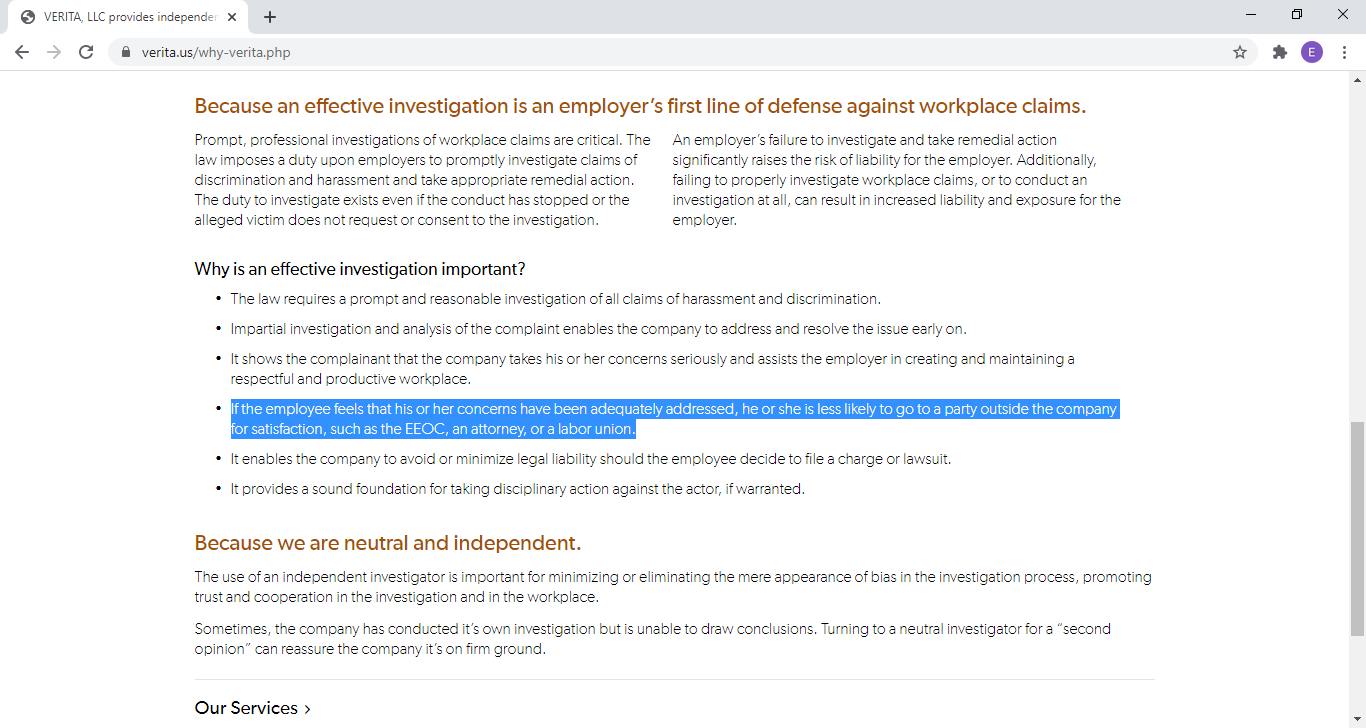

 7. On Dec. 18, the person who made the false allegations and conducted the campaign of defamation, threats and racist bullying removed her online posts. We in turn removed our public statement. She also retracted her allegations in a Title lX case that she had filed with Villanova University. Although under the Title IX regulations, the University had the right to pursue the complaint on its own, based on the evidence already in their possession, they decided to dismiss the complaint.
8. Anyone who accuses the PSL of harboring rapists should be ashamed. The PSL has a strong women-led process for dealing with allegations of sexual misconduct and abuse. Every allegation is taken seriously and every credible one investigated fully and objectively. If Steven Powers had been a rapist, he would have been expelled. PSL has expelled people for far less serious charges of abuse. For the sake of “optics,” the simplest thing would be to expel someone as soon as they are accused of abuse; then an organization could never be accused of “harboring abusers.” But the PSL has a commitment to seeking the truth and following its disciplinary and investigative processes, which have been discussed and ratified in detail by elected Party Congresses after lengthy party-wide discussions and amendment periods. As a condition of membership, every member vows to adhere to those processes, which are the outcome of those democratic discussions and votes, and which provide due process and procedure rather than unaccountable ad hoc decision-making.
9. A relatively small group of individuals have either resigned or been expelled from the PSL as a result of this situation. Some secretly circulated, with only a tiny sliver of information that was collected, their own conclusions about the investigation to try and create a scandal. Some focused on alleged conflicts of interest in the Philadelphia Steering Committee, when in fact the Central Committee fully took over this investigation shortly after the initial allegations were made and came to its conclusions independently. A couple others opened up a literary critique of this or that phrase in the statement that the Party released to defend itself. They’ve done this instead of defending the Black members being smeared, or the Party’s right to defend itself and its members from serious threats. An elected Latina leader of the Party called this out as racism, and now they have launched a false attack on her.
10. There are many lessons to be reviewed and learned from this months-long attack on the Party, which came in a form which for us was unprecedented. From the standpoint of this particular case, however, we now consider this matter closed. A properly constituted investigative and trial committee, composed of women democratically elected and entrusted to handle the most sensitive questions, made a unanimous decision. As per the norms of democratic centralism, the whole Party now unites behind it. Too much of our time has already been wasted on responding to a defamatory attack that falsely appropriated and grotesquely manipulated the hard-fought language and struggles of the women’s movement. It was necessary to respond, however, given the vicious targeting of our Black members and the real implications for our members’ security. As we enter 2021, the Party for Socialism and Liberation will redouble its efforts in the class struggle and in defense of the oppressed. This work, not words, will speak loudest about where people really stand.
7. On Dec. 18, the person who made the false allegations and conducted the campaign of defamation, threats and racist bullying removed her online posts. We in turn removed our public statement. She also retracted her allegations in a Title lX case that she had filed with Villanova University. Although under the Title IX regulations, the University had the right to pursue the complaint on its own, based on the evidence already in their possession, they decided to dismiss the complaint.
8. Anyone who accuses the PSL of harboring rapists should be ashamed. The PSL has a strong women-led process for dealing with allegations of sexual misconduct and abuse. Every allegation is taken seriously and every credible one investigated fully and objectively. If Steven Powers had been a rapist, he would have been expelled. PSL has expelled people for far less serious charges of abuse. For the sake of “optics,” the simplest thing would be to expel someone as soon as they are accused of abuse; then an organization could never be accused of “harboring abusers.” But the PSL has a commitment to seeking the truth and following its disciplinary and investigative processes, which have been discussed and ratified in detail by elected Party Congresses after lengthy party-wide discussions and amendment periods. As a condition of membership, every member vows to adhere to those processes, which are the outcome of those democratic discussions and votes, and which provide due process and procedure rather than unaccountable ad hoc decision-making.
9. A relatively small group of individuals have either resigned or been expelled from the PSL as a result of this situation. Some secretly circulated, with only a tiny sliver of information that was collected, their own conclusions about the investigation to try and create a scandal. Some focused on alleged conflicts of interest in the Philadelphia Steering Committee, when in fact the Central Committee fully took over this investigation shortly after the initial allegations were made and came to its conclusions independently. A couple others opened up a literary critique of this or that phrase in the statement that the Party released to defend itself. They’ve done this instead of defending the Black members being smeared, or the Party’s right to defend itself and its members from serious threats. An elected Latina leader of the Party called this out as racism, and now they have launched a false attack on her.
10. There are many lessons to be reviewed and learned from this months-long attack on the Party, which came in a form which for us was unprecedented. From the standpoint of this particular case, however, we now consider this matter closed. A properly constituted investigative and trial committee, composed of women democratically elected and entrusted to handle the most sensitive questions, made a unanimous decision. As per the norms of democratic centralism, the whole Party now unites behind it. Too much of our time has already been wasted on responding to a defamatory attack that falsely appropriated and grotesquely manipulated the hard-fought language and struggles of the women’s movement. It was necessary to respond, however, given the vicious targeting of our Black members and the real implications for our members’ security. As we enter 2021, the Party for Socialism and Liberation will redouble its efforts in the class struggle and in defense of the oppressed. This work, not words, will speak loudest about where people really stand.


